You don’t have to be an electrician to recognize when something is wrong with your home’s wiring. Perhaps a light flickers every time the microwave operates, or a wall outlet feels warm for no apparent reason. If your home is older or the circuits frequently overload, your wiring may already be giving you a warning.
This guide breaks down what to look for and when to act. The electrical repair experts at Pioneer Valley Environmental in Belchertown, MA, work with homeowners who want safer homes and fewer surprises.
Lights That Flicker Without Reason
If your lights flicker when no storm is occurring and you don’t have an appliance turning on, that change in brightness may point to a wiring problem. Wires that aren’t tightly connected or have started to wear down can interrupt the steady flow of power. It might start with a bulb dimming occasionally. You might brush it off, thinking the bulb is on its way out. However, if the issue occurs across different rooms or fixtures, your wiring may be sending a faulty message.
Electrical connections can loosen behind walls from heat, age, or movement. When a connection weakens, it disrupts power. The problem becomes increasingly difficult to ignore once issues spread to other parts of your home. If your lights are dim when you use the microwave, or a lamp flickers every time you walk by, it is time to have our team look at what’s going on.
Outlets That Feel Warm to the Touch
Your outlets should never feel warm to the touch. The only exception is a dimmer switch, which tends to feel slightly warmer than a traditional version. However, it should never feel hot. Warm outlets can indicate that the wires behind them are overloaded, loose, or deteriorating. When connections weaken, they build up heat. That heat may stay hidden inside the wall, or it may spread to the outlet cover where you can feel it. You may notice that the plastic faceplate appears discolored or warped.
Sometimes, you hear a faint hum or crackle when a circuit struggles to carry power. These symptoms tend to show up long before anything smells burnt or trips a breaker. If your hand hovers near an outlet and you feel warmth coming off it, it’s a sign to stop using it and have it checked. The heat you feel comes from resistance, and where there’s resistance, there’s risk.
Breakers That Trip More Than They Should
Your breaker panel is designed to shut off power when something unsafe happens in the wiring. One tripped breaker after a big storm or heavy appliance load isn’t unusual. If you find yourself flipping the same switch every week, or worse, every day, that’s your system trying to tell you something isn’t right. Frequent trips can happen when wires carry more power than they’re built to handle.
The problem may be an overloaded circuit, or it might mean something deeper in the wiring has started to fail. Old wires with worn insulation can cause short circuits or arcing. That arcing creates small bursts of heat that your breaker reads as a threat.
Outlets That Spark or Smell Odd
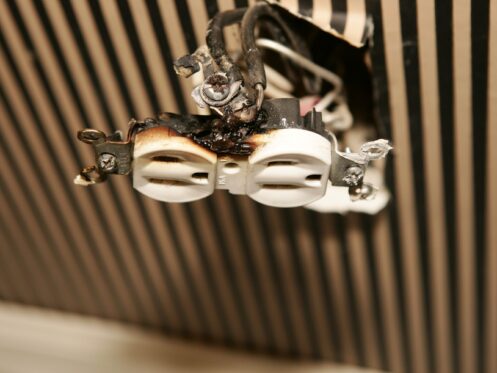
Sparks aren’t something you should ever see coming from an outlet. If you plug something in and see a flash or spark, that’s a clear signal of faulty wiring. It might be a sign of loose prongs inside the outlet or wires that no longer fit tightly into the terminal screws. Along with sparks, keep your nose on alert. That burnt, plastic-like smell near a switch or plug means something is heating up. You might not see flames, but that odor signals a problem that’s building out of sight.
Unplug any devices connected to the outlet immediately. That scent indicates that the heat has already begun melting a part of the wire’s jacket or the outlet’s interior plastic. Once the insulation is removed, the risk of a live wire touching the metal box or another wire increases significantly.
Incomplete Wiring Projects
Some home projects don’t get finished correctly. If you’ve opened a wall and have seen wires twisted together without tape or caps, this is an unsafe situation. People sometimes leave exposed wires or push them into the wall without a proper box during quick repairs.
Loose or forgotten wires can still carry electricity, and while they might sit quietly for now, they could shift later and start arcing. Hiding them doesn’t make the danger go away. If the wires aren’t capped, secured, and fully disconnected, they put your home at risk for serious electrical problems or fire.
Switches That Work Only Sometimes
When a light switch works intermittently, you might be dealing with more than a faulty switch. If the wiring behind it has come loose or is failing, the connection may not be reliable. You might flip a switch and find it necessary to wait a second before the light turns on. Certain bulbs can cause a slight delay, so it’s a good idea to rule this out as a problem.
Wires that shift inside a wall can interrupt the circuit even if they don’t come fully apart. That broken connection still holds voltage, which means heat builds every time power tries to pass through. The longer it goes unchecked, the more likely it is that the switch box itself gets damaged.
Extension Cords Carrying Too Much of a Load
If your house relies on extension cords to power everyday items, the wiring may already be overloaded. Extension cords aren’t designed to carry permanent loads or replace full-time outlets. If you’re plugging a space heater, lamp, and laptop into the same cord, that strain travels back through your walls to the breaker. Old wiring and modern appliances don’t always mix well.
When you need multiple cords in every room just to make things work, your system might be telling you it’s out of capacity. That’s not always a sign to call for a bigger panel. It might mean that some outlets aren’t working because of damaged wiring. Or maybe the circuits are too few and spread too thin. Either way, extension cords should never become the backbone of your electrical setup.
Buzzing, Humming, or Clicking You Can’t Explain
Your house shouldn’t sound electric. If you hear buzzing near an outlet, humming from inside the walls, or strange clicks from the ceiling when nothing’s on, it’s worth having a professional look into the problem. Sound is one of the earliest warning signs that something is not right with your wiring. Those noises often come from wires vibrating under strain or from electricity jumping across a loose connection.
The volume may rise and fall depending on what’s in use. You might only notice it when your refrigerator turns on or when the lights stay dim. Still, that hum can lead to heat building behind the walls. If sound travels through your outlets or fixtures without an obvious source, it’s not something to wait on. Electrical systems shouldn’t whisper or crackle.
What to Do When Something is Wrong
If you start to notice issues, like a light behaving differently or a switch warming up, don’t dismiss it. Looking for patterns can help pinpoint what part of the wiring needs inspection. Trust your gut when it tells you something isn’t working the way it should and get it fixed quickly, before you find yourself needing an emergency electrician.
Book Your Next Electrical Safety Check
If you’re noticing repeated power issues, warm outlets, or strange smells near your electrical panel, these are early signs that your wiring may not be as safe as you think. A licensed electrician can help you sort through what’s harmless and what needs to be fixed.
At Pioneer Valley Environmental, we also handle outlet upgrades and panel inspections to help you stay ahead of serious hazards. Book your next electrical safety check with Pioneer Valley Environmental in Belchertown today.