
As a homeowner, one thing you always have to be concerned about is the potential for your basement to flood. Even minor flooding can significantly damage flooring, trim, drywall, insulation and furnishings, forcing you to pay for costly repairs. If you don’t quickly take steps to remove the water and dry everything out, you could also end up having to deal with a serious mold infestation. Mold can start growing and spreading in as little as 24 to 48 hours. Sump pumps are the main line of defense against basement or crawlspace flooding, and this article will explain how they work, why basements/crawlspaces are prone to flooding and everything else you need to know.
How Snowmelt (and Rain) Can Cause Flooding
Even though cured concrete is extremely hard, it’s also much more porous than most people realize. Snowmelt after a major storm or heavy rains can cause the soil around and underneath a house’s foundation to become so waterlogged that water starts seeping through the concrete into the basement or crawlspace. This type of issue is especially common in low-lying areas or places with a high water table. As the water continually seeps in through the foundation floor, it can then quickly spread and cause extensive flooding throughout the entire area.
How a Sump Pump Prevents Flooding
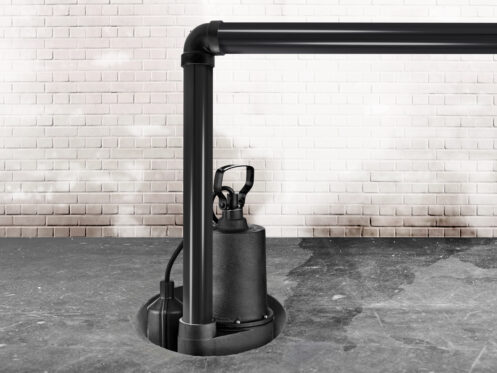
A sump pump system consists of three primary components: the pump itself, the sump basin or pit and the discharge pipes. The sump basin is a hole that’s between 18 and 24 inches in diameter and usually extends between 24 and 36 inches below the top of the concrete foundation floor. The floor of the basin is bare dirt to allow water to seep in, but the vertical surfaces are a plastic or metal circle that holds water within the basin.
Whenever the soil underneath the foundation is overly wet, water seeps through the floor of the basin and starts to fill it. As the basin fills, the water trips the float or switch and causes the pump to start running. The pump then starts pushing the water up and out through the discharge pipes so that it drains away from the foundation.
The fact that the basin sits below the floor of the foundation means that water will always flow into the basin before the soil gets wet enough that it starts seeping up through the concrete. As long as the sump pump is sufficiently sized and works correctly, it should keep pumping out enough water to prevent the basement or crawlspace from flooding.
How to Choose the Right Sump Pump for Your Home
When installing a sump pump, you need to make sure that you choose the right type and size for your home’s needs. Otherwise, the pump may not work effectively enough to prevent flooding. Pedestal sump pumps sit on the foundation floor or on top of the basin lid and have a pipe that extends down to the bottom of the basin. Submersible pumps instead sit within the basin, usually on top of several bricks to keep them off the dirt.
Pedestal pumps are generally less expensive and last a bit longer since the actual pump isn’t ever exposed to water. However, they aren’t as powerful as submersible pumps and are really only suitable for places that are less prone to flooding. Pedestal pumps are also more likely to overheat, which can potentially cause the motor to seize up. Submersible pumps rarely overheat, as the water surrounding the pump helps to cool the motor.
If you live in an area that has a higher water table or the discharge pipes have a longer combined vertical and horizontal distance, a submersible pump is definitely the better option. A submersible pump is also the best option if your home has a basement instead of a crawl space. Pedestal pumps can be quite loud. Pedestal pumps are much quieter since the water helps to muffle the sound of the motor running.
The horsepower of the motor is an equally important consideration when deciding which sump pump to install. Higher-horsepower motors can pump out more gallons of water per minute and also effectively pump the water a longer distance.
If you’re adding a sump pump system to your home, you also need to make sure that the basin is sufficiently sized. With a properly sized sump pump and basin, the pump will typically only need to run for 10 to 30 seconds before shutting off. It will then keep cycling on and off every few minutes as the basin refills until the soil is dry. If the basin is too small or the pump is undersized, the pump will have to run much longer and wear out sooner. The bigger concern is that the pump may not prevent the basin from overflowing and flooding the surrounding area.
The Importance of Testing Your Sump Pump
Although some sump pumps can work effectively for 10+ years, the average lifespan is only five to seven years. Pumps that get excessive use typically fail sooner, but sitting idle for prolonged periods can also lead to a sudden failure. Testing your sump pump before heavy snowfall or major rains is important for ensuring it still runs and pumps water out of the basin effectively.
To test your sump pump, all you need to do is use a bucket or hose to partially fill the basin with water. The pump should start running within a few seconds and then quickly empty the basin. If the pump doesn’t run, it means that either the switch is faulty or the motor is worn out. Hiring a professional to replace the switch may fix the problem, but you’re better off just replacing the pump if it’s near the end of its expected lifespan. If the pump is slow, you may just need to clean the inlet screen to remove mud and debris.
Benefits of Investing in a Sump Pump Alarm and Backup Battery
A sump pump alarm and backup battery add further redundancies to mitigate the risk of flooding. The alarm is a moisture sensor that gets mounted at least several inches below the top of the basin. If the water level ever gets high enough to contact the sensor, the alarm will immediately go off to alert you that the basin may soon overflow. Most alarms are loud enough that you’ll hear the sound throughout most of the house. There are also smart Wi-Fi alarms that will send a notification to your phone in case you aren’t home.
Connecting your sump pump to a backup battery ensures that it will still be able to run in case of a power outage or if the outlet the pump is plugged into stops working. The backup system constantly monitors the power coming from the outlet and will automatically switch to battery power as needed.
If you want to install a sump pump for your home or need any help with an existing pump, Pioneer Valley Environmental has you covered. We’ve been serving Belchertown and the Quaboag Valley since 1999 and have an expert team ready to handle all of your plumbing installation needs. For sump pump and plumbing services you can trust, contact the pros at Pioneer Valley Environmental.