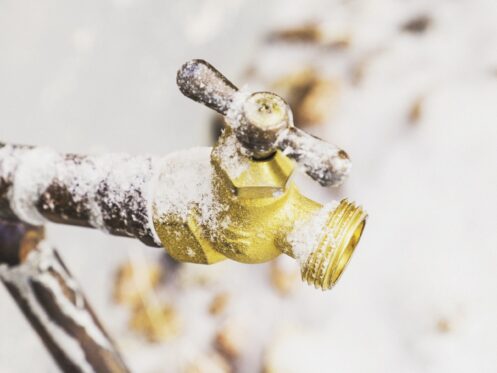
The winter weather in Ware, MA is great for snow tubing, ice fishing, skiing, and sledding. But for your outdoor plumbing, it can cause serious issues. Ice and snow are hazards to outdoor faucets and exposed pipes, sometimes causing them to freeze and burst. Fortunately, there are several ways to prepare all of the outdoor plumbing for winter. Here’s a step-by-step guide.
Signs Your Outdoor Plumbing Isn’t Ready for Winter
You can look for certain signs to know whether your home’s plumbing needs an update for winter. Here are the biggest clues to watch for:
- Garden hoses still attached to spigots
- Outdoor shutoff valve left in the “on” position
- Cracked or dripping outdoor faucets
- Exposed pipes without any insulation
- Clogged drains around driveways or patios
- Corrosion or rust on visible pipe joints
- Standing water near foundations or low spots
- Sprinkler system lines that haven’t been drained
Disconnect Garden Hoses
First things first: disconnect all garden hoses attached to any exterior faucets. If you leave them connected, water will get trapped inside and freeze during colder weather. As the frozen water expands, it’ll damage each hose. Keeping them in a shed or garage is the best way to protect them from cracking and splitting.
Shut Off Outdoor Water Supply
Your home likely has an outdoor water shutoff valve in the basement or utility area. This valve cuts off water flow to the outdoor spigots. Turning it to the off position will ensure no water gets trapped in the lines. Just make sure to do this before the next cold snap, or you risk burst pipes. This simple task is one of the easiest ways to prevent some of the most expensive plumbing repairs.
Drain Outdoor Faucets
After making sure the water supply is off, you can drain the faucets themselves. If you fail to drain them, the residual water can freeze, leading to hidden ice plugs. These plugs not only block the line but also result in pressure buildups that severely damage pipes. Just open each outdoor spigot and let the remaining water drain. Leaving the spigot slightly open will relieve pressure if a small amount of water were to remain inside.
Insulate Exposed Pipes
All of your outdoor pipes need proper insulation to protect against freezing. This includes all exposed piping running along exterior walls, inside unheated basements, and through crawl spaces. The best types of insulation usually come in the form of foam sleeves, heat tape, or fiberglass. The enhanced thermal barrier does much more than prevent freezing. It also enhances the home’s energy efficiency, resulting in lower utility costs and improved HVAC performance.
Inspect Outdoor Drains
Your property more than likely has multiple outdoor drains. Common places to find them include driveways, patios, walkways, and other low-lying areas. You may also have one or more in any unattached garages or sheds. These drains are designed solely for directing water away and preventing flooding. But over time, they can clog with dirt and leaves. You may need to hire a plumber to clean them before the cold weather settles in. Here at Pioneer Valley Environmental, we offer professional hydro-jetting and rooter service to keep your outdoor drains operating efficiently.
Winterize Sprinkler Systems
If you use a sprinkler system to keep your lawn beautiful, you must drain it before the cold weather sets in. Any water left in the lines has the potential to freeze and cause damage. Dealing with underground frozen pipes can be a nightmare. Professional plumbers offer blow-out services to clear every last drop from the sprinkler using compressed air. Winterizing the system might seem like a hassle, but it can save you thousands on costly repairs.
Protect Outdoor Spigots
Just like the pipes, the outdoor spigots also need insulation. You can do this by purchasing inexpensive foam covers at almost any local hardware store. These covers slip over outdoor faucets to trap heat and prevent cold air from entering. Be aware that some covers don’t protect against frost. And since you live in Massachusetts, it’s essential to upgrade due to the freezing-cold weather that lingers each winter. Installing the frost-proof versions gives you the protection you need to prevent weak spots in your plumbing.
Clear Gutters and Downspouts
Your gutters might not be the first thing that comes to mind when you think of plumbing. But in reality, they play a large role in protecting your pipes and foundation. When the gutters clog with leaves and other debris, winter’s melting snow and ice can’t flow freely. This results in water pooling around the foundation, weakening the home’s structural integrity. If the water seeps into your basement or freezes in outdoor drains, it may lead to high-priced plumbing fixes. Keeping the gutters clean is also important for making sure ice dams don’t weigh down the roofline.
Schedule a Professional Plumbing Inspection
Some aspects of winterizing your outdoor plumbing require professional assistance. This is why scheduling an inspection each fall is such a good idea. We’ll come to your home and inspect your plumbing to ensure it’s ready for winter’s cold weather. The inspection typically lasts between two and four hours, depending on the property’s size.
Identify Hidden Leaks
We’ll conduct a walkthrough of your entire property to inspect for leaks. We’ll check all hose bibs, outdoor faucets, exposed pipe joints, and sprinkler heads. It’s easy to overlook these spots, but water from small cracks can lead to serious damage. For every leak we find, we’ll choose from multiple repair methods to select the proper fix. Leaks caused by frozen pipes sometimes require pipe replacement to prevent recurrence. Small drips may seem harmless at first, but they often develop into major leaks if you don’t take prompt action. Once the freezing weather arrives, leaks become magnets for ice buildup. Fixing them now will save you much more than just time—you’ll save money and stress since you won’t have to deal with emergency plumbing calls.
Check for Pipe Corrosion
Pipe corrosion is a leading cause of leaks, weak spots, and other plumbing issues. Outdoor faucets and exposed pipes are particularly susceptible to rust due to their constant exposure to moisture. During the winter, the freeze and thaw cycles contribute to cracking. We’ll find any corroded plumbing and clean or replace damaged sections to restore safe water flow.
Spot Early Signs of Freeze Damage
We inspect all outdoor pipes for hairline cracks and discoloration. If we notice any bulging spots or surface rust, it indicates that the pipe has weak points from past freeze cycles. These issues only worsen over time, so being prompt with repairs is crucial to preventing burst pipes and water damage.
Pioneer Valley Environmental is here to answer any questions you have about winterizing your outdoor plumbing. Our team has many years of experience helping homeowners with plumbing installations, repairs, and maintenance. Call Pioneer Valley Environmental today to access the best plumbing support in Mare.