
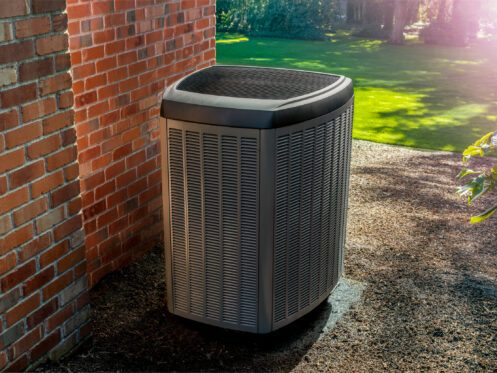
When it comes to getting a new air conditioning system for your home, you need to ensure that it’s properly sized. An improperly sized AC unit can lead to issues like inefficiency and poor comfort. Knowing how AC sizing works can go a long way in helping you make a better-informed decision about your next unit replacement.
Why Does Proper Sizing Really Matter?
All air conditioning systems are given a capacity rating measured in tons or BTUs, which stands for British thermal units. This describes the cooling capacity per hour. One ton equals 12,000 BTUs per hour. Determining the appropriate size air conditioning unit really starts with determining your home’s cooling load. This is described as the amount of cooling required to keep your home at a comfortable temperature throughout the summer.
Determining your home’s cooling load includes understanding your square footage, windows, insulation, ceiling height, and even local climate factors. If you end up with an AC unit that’s undersized for your home, it can lead to a few different problems. The most obvious is inefficient cooling. A unit that’s too small won’t be able to reach your desired indoor temperature setting on hot days.
This will leave parts of your home feeling uncomfortable while your unit operates constantly. This increases the wear and tear on the internal components of your unit and greatly shortens its overall lifespan. With constant system operation, you’ll end up paying more for energy bills due to high energy consumption.
Just as a unit that’s too small leads to issues, so does an oversized unit. One of the most notable is that you’ll be paying a higher purchase price than is actually necessary. If your unit is oversized, it will run shorter cycles, meaning constant wear and tear on your unit. When your system is running shorter cycles because it’s reaching your desired temperature setting fairly quickly, it doesn’t run long enough to properly dehumidify the air.
This creates a problem when it comes to your comfort. When humidity levels are too high indoors during the summer, it can make the air feel clammy and uncomfortable. Furthermore, this increased short cycling can shorten the lifespan of your unit and lead to a higher risk of experiencing expensive repairs. When you think about unit sizing, getting the correct AC size is about enhancing your comfort, optimizing system efficiency, providing long-term cost savings, and extending overall system longevity.
How Do Professionals Calculate Appropriate AC Size?
If you’ve done any reading online about how to properly size an air conditioning system, one of the first things you’ll run across is square footage. Far too often, homeowners think that square footage is the only factor that plays a key role in determining unit sizing. While this is a great starting point and an important part of the calculation, it’s not all of it. Square footage alone doesn’t tell the full story when it comes to determining the appropriate size air conditioner for your home.
Professionals use what’s called a Manual J load calculation to determine your home’s cooling requirements. This calculation will take into account not only square footage but also your ceiling heights, insulation, windows and doors, and many other factors. If you have a home with high ceilings, it will have more air volume to cool. For example, a 10-foot ceiling requires more cooling than an 8-foot ceiling in a room with the same square footage.
If you live in an older home that has minimal insulation, it’s much harder for it to retain cool air. This will cause your air conditioning system to run more often, meaning you need a higher capacity unit. On the other hand, well-insulated homes are good at retaining cool air, so you won’t need as big a unit to compensate for heat gain.
Windows and doors also play a role in this calculation. If you have larger windows or a high number of windows, it increases heat gain during the summer. South-facing windows receive more direct sunlight and will increase the cooling load. If you have double-pane or low-emissivity windows that reduce heat transfer, they can decrease your cooling system’s needs.
The local climate also plays a role in cooling capacity. For example, a 1,000-square-foot home in the middle of Phoenix will need a larger AC than the same-sized home in Seattle. If you have a drafty home with poor sealing, it can allow cool air to escape and hot air to enter, which could require a larger unit. Other key factors considered in the Manual J calculation include occupancy, appliances, and ductwork efficiency.
Key Signs You Have the Wrong AC Unit
As a homeowner, it’s important to be mindful of the clear signs that your AC unit may not be properly sized for your home. By recognizing these issues early on, you can consult one of our technicians to get a professional evaluation. This can help you prevent unnecessary energy costs and system damage.
One of the biggest indicators of an undersized unit is uneven cooling. If all of your vents are completely open and unobstructed, then you likely have an issue with your AC sizing or your ductwork is improperly designed. If your air conditioning system is constantly short cycling, meaning it’s frequently turning on and off, it could be due to an oversized unit.
High indoor humidity levels also point to an oversized unit that isn’t running long enough to remove excess moisture from your home. Frequent hot or cold spots throughout your home, as well as uneven airflow, can point to a cooling load issue. Additionally, higher energy bills without any change in your usage pattern can mean that your air conditioning system is working harder than necessary because it’s improperly sized.
When to Call for an AC Replacement
If your air conditioning system is experiencing some of the issues above, it’s time to call a professional. One of our technicians can thoroughly evaluate your unit and determine if it’s oversized or undersized for your space. If your existing air conditioning system is experiencing frequent breakdowns, it could be a sign that it’s time to replace it with a new one because its internal components are wearing out.
In general, most central air conditioners last about 15 to 20 years, while heat pumps last about 10 to 15 years. If your air conditioning system is nearing the end of its usable lifespan, it’s typically best to replace it sooner rather than later. Continuing to run an outdated unit can lead to excessively high energy bills and poor indoor comfort. If you plan on adding square footage to your home, it’s important to have your original air conditioner evaluated to determine if it will be sufficient or if it needs to be upgraded.
Expert AC Installation Service
Pioneer Valley Environmental provides expert AC installation services for Ware, MA and the surrounding communities. We can also assist with all your AC replacement, repair, and maintenance needs. Contact our office today to schedule an appointment with one of our HVAC technicians.