
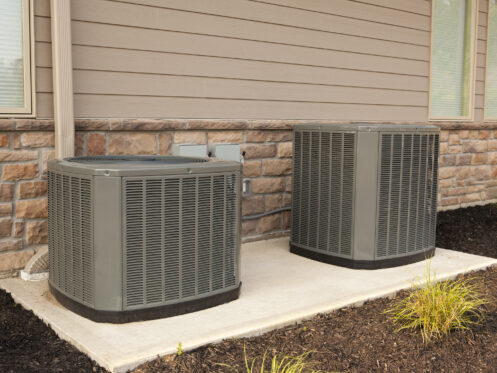
As Massachusetts homeowners seek efficient ways to heat and cool their properties, heat pumps are a popular solution. But you may wonder if a ducted or a ductless system is the right choice. Both options use heat pump technology for year-round comfort but deliver it differently. The best fit depends on your existing ductwork, home layout, and comfort priorities.
Choosing between these two systems is about matching the technology to your circumstances. Whether you have a historic home without ducts or a modern home with central HVAC, a heat pump can enhance your comfort and efficiency. This guide explains the key differences between heat pumps and mini-splits to help you make an informed decision.
How Ducted and Ductless Heat Pumps Deliver Comfort
Both ducted and ductless systems operate on the same principle. An outdoor unit absorbs or releases heat, and an indoor unit distributes the conditioned air. The primary difference is how that distribution happens. A ducted system operates much like a traditional furnace or central air conditioner. It connects to a central air handler that pushes conditioned air through a network of ducts to vents in each room.
A ductless system, often called a mini-split, uses one or more individual indoor units mounted directly in the rooms they serve. These indoor units are connected to the outdoor unit via a small conduit containing refrigerant and electrical lines. Both systems are highly effective at providing both heating and air conditioning.
When Does a Ducted Heat Pump Make More Sense?
A ducted heat pump is often the most straightforward choice for homes that already have ductwork in good condition. If your home has a central furnace and air conditioner, upgrading to a heat pump is often seamless. We can usually use the existing ductwork without extensive interior modifications.
Many homeowners prefer ducted systems for aesthetic reasons. Because the air is delivered through discreet floor, wall, or ceiling vents, the system remains largely invisible. Ducted systems are designed for whole-home airflow, providing a consistent temperature throughout the house. For this to work efficiently, the ductwork must be properly sized, well-sealed, and free of leaks that could waste energy.
Which Homes Are Better Suited to Ductless Mini-Splits?
Ductless mini-splits are perfect for older or historic Massachusetts homes built without ductwork. They avoid the expensive and disruptive process of retrofitting a full duct system. They are also excellent for home additions, converted attics or garages, and sunrooms where extending existing ductwork isn’t practical.
Beyond homes without ducts, mini-splits excel at solving comfort problems in specific areas. If a room is always too hot or cold, a single ductless unit can provide dedicated heating and cooling. The greatest advantage of these systems is their ability to offer independent temperature control. Each indoor unit has its own thermostat, allowing you to create customized comfort zones and avoid heating or cooling unoccupied rooms.
Ducted vs. Ductless Comfort and Zoning
The biggest difference in day-to-day comfort comes down to zoning. A ducted system is typically controlled by a single, central thermostat. While some high-end ducted systems can be configured for limited zoning, they are fundamentally designed to maintain one temperature across the entire home. This is great for households with consistent comfort needs.
- Have existing, quality ductwork
- Prefer even temperature throughout home
- Want a single filter to change
- Desire a seamless look
Ductless systems, on the other hand, are built for zoning. Each indoor unit can be set to a different temperature, catering to individual preferences. This is a game-changer for families with different comfort levels or for homes with distinct usage patterns, such as a home office. Your home’s layout and your family’s lifestyle will heavily influence which approach is better.
- Have varying comfort needs
- Don’t have existing ductwork
- Have comfort issues in specific rooms
- Converted a garage or attic
How Do Installation Costs and Disruption Compare?
The cost and scope of an HVAC installation vary significantly between ducted and ductless systems. But neither type is inherently cheaper; the final cost depends entirely on the project specifics. For a home with ready-to-use ductwork, installing a ducted heat pump can be relatively straightforward. However, if the ducts need significant repairs or sealing, costs can increase.
Installing a ductless system doesn’t require major demolition. However, it does involve mounting indoor units and drilling a small hole to connect them to the outdoor unit. Complexity and cost increase with the number of indoor units you need. Both systems require professional electrical work for safety. At Pioneer Valley Environmental, we provide transparent pricing and can discuss financing options on approved credit for either type of installation.
Cold-Weather Performance in Massachusetts
A major concern for Massachusetts homeowners is how a heat pump will perform during harsh winters. Cold-climate heat pumps, available in ducted and ductless models, have advanced significantly. These systems extract heat from the air efficiently even when temperatures drop well below freezing.
Correct sizing and professional installation are always non-negotiable for reliable winter performance. An undersized system will struggle to keep up, while an oversized one will cycle improperly and reduce efficiency. A backup heat source, such as electric resistance strips or a dual-fuel system, is also an option. This ensures your comfort is guaranteed on the coldest days.
Efficiency, Maintenance, and Appearance
When it comes to efficiency, ductless systems have a natural edge. Ducted systems can lose up to 30% of their conditioned air through leaks and poor connections. Because ductless mini-splits deliver air directly into the room, they eliminate this energy loss. However, a high-efficiency ducted system with tightly sealed ductwork can also perform very well.
Maintenance needs also differ. A ducted system has a central filter that needs replacement every one to three months. Ductless systems have washable filters in each indoor unit that homeowners should clean every two to four weeks. Both system types require an annual professional tune-up to keep them running efficiently.
Aesthetically, the choice is between the nearly invisible vents of a ducted system and the visible, wall-mounted units of a ductless system. The outdoor unit for a ductless system is also usually much smaller than for a ducted heat pump.
Which Heat Pump System Fits Your Massachusetts Home?
Ultimately, the best choice depends on a careful evaluation of your home and goals. Consider your ducts’ condition, your floor plan, your desire for zoning, your budget, and your aesthetic preferences. Both ducted and ductless heat pumps offer energy-efficient heating and cooling.
Because every home is unique, the best next step is a professional consultation. Our technicians can assess your property, listen to your needs, and provide a clear comparison of ducted and ductless options. We care about your comfort, and we’re here to help you find the perfect solution.
For heat pumps in Ware, MA, or anywhere in the Pioneer or Quaboag Valley, contact Pioneer Valley Environmental today.
Ducted and Ductless Heat Pump FAQs
Yes, when designed with multiple indoor units placed strategically, a cold-climate multi-zone ductless system can provide consistent and efficient heat all winter. Proper sizing and design by a qualified professional are key to ensuring it meets your home’s heating load.
In many cases, yes, the ductwork used for your furnace can also be used for a central, ducted heat pump. However, a professional technician must evaluate it first. They will need to assess the ductwork’s size, condition, and design.
Technically, ductless systems are often more efficient because they don’t suffer from energy losses associated with ductwork. However, a high-efficiency ducted heat pump paired with a properly sealed duct system can also operate with exceptional efficiency. The real-world difference depends on the quality of the installation.